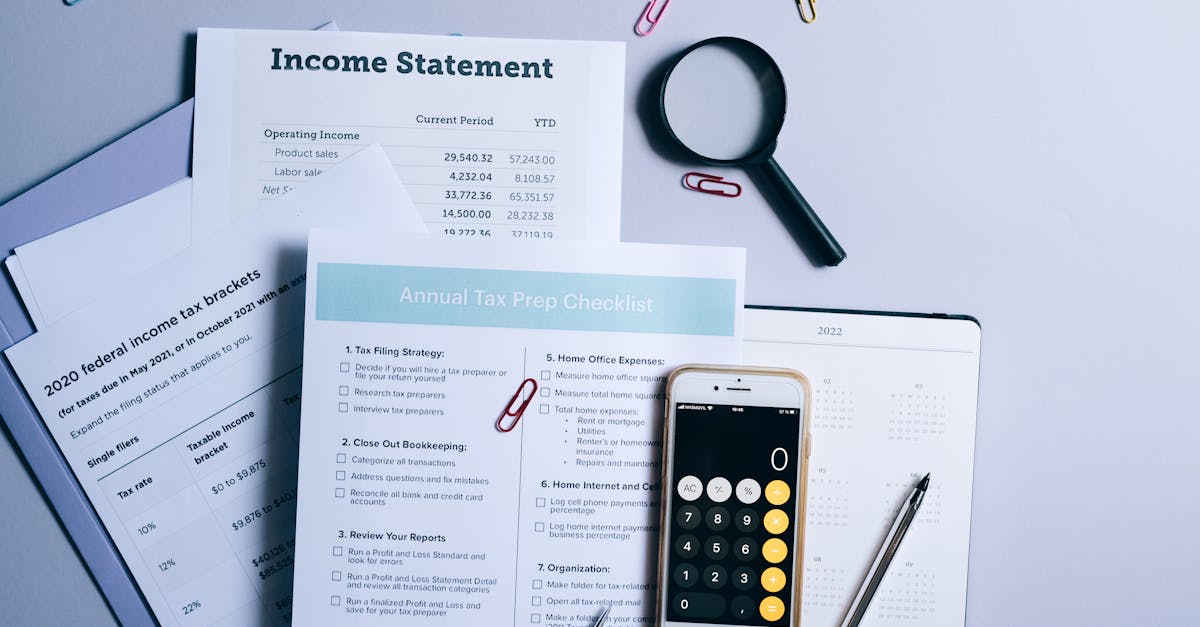
Unlock long-term growth with taxable brokerage accounts. Learn how they work, key considerations, and how to start investing smart for your future.
When I first started investing, I did what most people do: I maxed out my 401(k) and Roth IRA. It felt great, like I was truly taking control of my financial future. But then, a new question emerged: What do I do with the extra money I want to invest after hitting those annual limits? For many, this is where confusion sets in. The world of taxable brokerage accounts often feels less straightforward than employer-sponsored plans or IRAs, largely because it lacks the same explicit tax advantages.
Yet, for anyone serious about building significant wealth beyond traditional retirement vehicles, taxable brokerage accounts aren’t just an option—they’re essential. They offer unparalleled flexibility and control over your investments, allowing you to grow your money for both short-term goals (like a house down payment) and long-term aspirations (like early retirement). The mistake I see most often is that people either ignore these accounts entirely, thinking they’re ‘only for the rich,’ or they approach them without understanding the unique tax implications and strategic considerations. What changed everything for me was realizing that a taxable brokerage account isn’t just a ‘leftover’ option; it’s a powerful, versatile tool that complements your tax-advantaged accounts, giving you a complete and robust investment strategy.
Key Takeaways
- Taxable brokerage accounts offer essential flexibility for wealth growth beyond retirement limits.
- Understanding capital gains and losses is crucial for minimizing taxes in these accounts.
- Strategic asset placement can significantly enhance after-tax returns across your entire portfolio.
- Long-term holding periods are vital to benefit from lower capital gains tax rates.
Understand the Core Mechanics: How Taxable Accounts Differ
The most fundamental distinction of a taxable brokerage account is right in its name: your investment gains are subject to taxes annually or upon sale. Unlike a Roth IRA where qualified withdrawals are tax-free, or a 401(k) where growth is tax-deferred, in a taxable account, you’ll generally owe taxes on dividends, interest, and realized capital gains. This isn’t a bad thing; it just means you need a different strategy. In my experience, many beginners are so scared of ‘paying taxes’ that they miss out on substantial growth opportunities. The truth is, paying taxes on investment gains means you’ve made money, which is a good problem to have!
Here’s what this means in practice:
- Dividends and Interest: If your investments (stocks, mutual funds, ETFs, bonds) pay dividends or interest, you’ll receive a 1099-DIV or 1099-INT form each year, and these amounts are typically taxed as ordinary income or qualified dividends, regardless of whether you reinvest them or take them as cash. This is a crucial difference from tax-advantaged accounts where these payments grow untaxed.
- Capital Gains: When you sell an investment for more than you bought it for, you realize a capital gain. These gains are categorized as either short-term (held for one year or less) or long-term (held for more than one year). Short-term gains are taxed at your ordinary income tax rate, which can be as high as 37% in 2026. Long-term gains, however, receive preferential tax treatment, usually taxed at 0%, 15%, or 20% depending on your income. This distinction alone should drive much of your investment strategy in these accounts.
- Capital Losses: The flip side is capital losses. If you sell an investment for less than you paid, you realize a capital loss. These losses can be used to offset capital gains, and if your losses exceed your gains, you can deduct up to $3,000 per year against your ordinary income. Any remaining losses can be carried forward indefinitely to offset future gains.
My initial mistake was treating these accounts like extensions of my Roth IRA, selling holdings too frequently. This resulted in a lot of short-term capital gains, which meant a significantly larger tax bill each year. What I learned, and what I now tell everyone, is to focus on long-term buy-and-hold strategies in taxable accounts to maximize those preferential long-term capital gains rates. This single shift can save you thousands of dollars in taxes over the years.
Master Tax-Loss Harvesting for Year-End Optimization
One of the most powerful and often underutilized strategies in taxable brokerage accounts is tax-loss harvesting. This isn’t some complex trick; it’s a perfectly legal and legitimate way to reduce your current tax bill by strategically selling investments that have lost value. In my early days, I would hold onto losing investments, hoping they’d recover. This felt emotionally safer but was financially shortsighted. What actually helps is embracing the temporary loss for a larger tax benefit.
Here’s how it works:
- Identify Losers: Towards the end of the year, review your taxable portfolio for any investments trading below your purchase price. These are your potential losses.
- Sell to Realize Loss: Sell these investments to ‘realize’ the capital loss. Let’s say you bought 100 shares of Company X for $100 and they’re now worth $80. Selling them realizes a $2,000 capital loss.
- Offset Gains and Income: This $2,000 loss can first offset any capital gains you’ve realized that year. If you sold Company Y for a $1,500 gain, your net gain for the year is now only $500.
- Deduct Against Ordinary Income: If your realized losses exceed your gains, you can deduct up to $3,000 of those net losses against your ordinary income. This directly reduces your taxable income, potentially pushing you into a lower tax bracket.
- Carry Forward: If you have more than $3,000 in net losses, the remainder can be carried forward to future tax years, reducing your tax burden for years to come.
The Wash Sale Rule: A critical caveat is the ‘wash sale’ rule. You cannot buy the ‘substantially identical’ security within 30 days before or after selling it for a loss. For example, if you sell Company X for a loss, you can’t buy shares of Company X again within that 61-day window. You can, however, buy a different, but similar, investment (e.g., an S&P 500 ETF if you sold a broad market index fund) to maintain your market exposure. This is a nuanced point that, when ignored, can invalidate your tax-loss harvesting efforts.
I’ve personally used tax-loss harvesting to save hundreds, sometimes thousands, on my tax bill. It takes a little planning at year-end, but the return on that time investment is significant. It’s about being proactive and using the rules to your advantage, rather than letting potential losses just sit there.
Strategic Asset Placement Across All Your Accounts
This is where an investment strategy truly becomes sophisticated: asset location. It’s not just about what you invest in, but where you invest it. The goal is to maximize your after-tax returns by placing different types of assets in the account type that offers the greatest tax efficiency. When I started, I thought diversification was just about having different investments; I missed the layer of optimizing where those investments lived.
Here’s the general rule of thumb that changed how I structured my entire portfolio:
- Taxable Accounts: Best for tax-efficient assets. This includes:
- Low-turnover index funds and ETFs: These generate fewer capital gains distributions than actively managed funds, making them ideal for a buy-and-hold strategy in a taxable account. My preference is for broad market ETFs like VOO or SPY, which track the S&P 500.
- Individual stocks: If you’re picking stocks, holding them long-term in a taxable account benefits from lower long-term capital gains rates.
- Municipal bonds: For high-income earners, the interest from municipal bonds is often tax-exempt at the federal level and sometimes at the state and local levels, making them highly efficient in taxable accounts.
- Tax-Advantaged Accounts (401k, IRA): Best for tax-inefficient assets. This includes:
- Actively managed funds: These tend to have higher turnover, generating more capital gains distributions that would be taxable annually in a brokerage account. In a tax-deferred or tax-free account, these distributions don’t trigger immediate taxes.
- High-dividend stocks or funds: Dividends are taxed annually in a taxable account. In an IRA or 401(k), they compound tax-free.
- Bonds (other than municipal bonds): Bond interest is typically taxed as ordinary income, which is often higher than long-term capital gains rates. Housing these in tax-advantaged accounts protects that income from immediate taxation.
The mistake I often observe is people putting their most tax-efficient assets in tax-advantaged accounts and vice versa. For example, holding municipal bonds in a Roth IRA, where their tax-exempt income is already protected from taxes, is redundant and wastes the Roth’s precious tax-free growth potential. Conversely, putting a high-turnover actively managed fund in a taxable account means you’re hit with capital gains taxes year after year. By strategically placing assets, you can reduce your overall tax drag and allow your wealth to compound more effectively across your entire financial landscape.
Prioritize Low-Cost, Broad-Market ETFs
When it comes to selecting investments for your taxable brokerage account, my unwavering advice, born from years of watching markets, is to prioritize low-cost, broad-market Exchange Traded Funds (ETFs). The mistake I see far too many beginners make is chasing individual stocks or expensive actively managed mutual funds, drawn in by the allure of ‘beating the market.’ What actually works for the vast majority of investors is a simpler, more disciplined approach centered on minimizing costs and maximizing diversification.
Here’s why I advocate this approach:
- Minimal Capital Gains Distributions: Broad-market index ETFs are inherently tax-efficient. Because they track an index rather than actively buying and selling, their portfolio turnover is very low. This means they distribute fewer capital gains to investors each year compared to actively managed funds, significantly reducing your annual tax burden in a taxable account.
- Low Expense Ratios: Expense ratios are the annual fees you pay as a percentage of your investment. A 0.5% expense ratio might sound small, but over decades, it can eat significantly into your returns. Low-cost ETFs often have expense ratios as low as 0.03% to 0.1%, which keeps more of your money working for you. For example, investing $100,000 for 30 years at 7% annual growth, a 0.5% expense ratio shaves off over $60,000 compared to a 0.05% expense ratio. This is real money.
- Diversification: Instead of putting all your eggs in one basket with individual stocks, broad-market ETFs give you instant diversification across hundreds or thousands of companies. This reduces risk without sacrificing growth potential. For example, an S&P 500 ETF invests in the 500 largest U.S. companies, giving you exposure to a huge segment of the market.
- Flexibility and Liquidity: ETFs trade like stocks throughout the day, offering greater flexibility than traditional mutual funds. They’re also highly liquid, meaning you can easily buy or sell shares at market price whenever needed.
My personal portfolio in my taxable accounts is heavily weighted towards just two or three broad-market ETFs. This simplicity not only keeps my costs down but also makes tracking and rebalancing straightforward. This approach might not be as exciting as ‘stock picking,’ but in my experience, it’s a far more reliable path to long-term wealth accumulation.
Navigate Tax Reporting with Confidence
One aspect that intimidates many new investors in taxable brokerage accounts is the annual tax reporting. The fear of making a mistake or not knowing what forms to expect can lead to paralysis. My early experience involved a lot of head-scratching over tax forms, but over time, I realized it’s a manageable process if you understand the key documents. What actually helps is a clear, step-by-step understanding of what to look for and when.
Here are the primary tax forms you’ll encounter and what they mean:
- Form 1099-DIV (Dividends and Distributions): This form reports all dividends and capital gains distributions you received from stocks, mutual funds, and ETFs. It differentiates between ‘qualified’ dividends (taxed at lower long-term capital gains rates) and ‘non-qualified’ dividends (taxed as ordinary income).
- Form 1099-INT (Interest Income): This form reports any interest earned from bonds, savings accounts, or other interest-bearing investments.
- Form 1099-B (Proceeds From Broker and Barter Exchange Transactions): This is arguably the most important form for taxable accounts. It reports the proceeds from all sales of securities, including the date of sale, the cost basis (your original purchase price), and whether the gain or loss was short-term or long-term. Your broker will typically calculate the cost basis for you, which is a huge help.
Key Actions to Take:
- Consolidate Documents: Your brokerage firm will send these forms to you (and the IRS) usually by mid-February. If you have accounts with multiple brokers, ensure you receive forms from all of them.
- Verify Cost Basis: While brokers usually report cost basis accurately, it’s wise to double-check, especially if you transferred investments between firms or had complex transactions. An incorrect cost basis can lead to overpaying or underpaying taxes.
- Use Tax Software or a Professional: For beginners, tax software (like TurboTax or H&R Block) can significantly simplify the process by allowing you to import your 1099s directly. As your portfolio grows more complex, consider a qualified tax professional who can help with advanced strategies like nuanced tax-loss harvesting or asset placement.
The biggest lesson I learned is that proactively collecting these documents and understanding their purpose removes most of the anxiety. Don’t wait until April 14th; start organizing your tax documents as soon as they arrive. This approach makes tax season a routine financial task rather than a stressful scramble.
Set Clear Goals for Your Taxable Investments
Finally, and perhaps most importantly, successful investing in a taxable brokerage account hinges on setting clear, intentional goals. The mistake I often observe is people treating these accounts as a generic ‘extra savings’ bucket without a specific purpose. Without a clear destination, it’s easy to drift, make impulsive decisions, or succumb to short-term market noise. What changed everything for me was defining why I was investing in these accounts, separate from my retirement funds.
Consider these examples of common goals for taxable accounts:
- Down Payment for a Home: If you’re saving for a home within the next 3-5 years, a taxable brokerage account can be a great place for growth, albeit with careful risk management. You’d likely lean towards less volatile investments or a higher allocation to cash as you get closer to your goal.
- Education Funding: While 529 plans are tax-advantaged for education, a taxable account offers more flexibility if your child decides not to pursue higher education, or if you want to fund education for yourself or another family member without specific age or beneficiary restrictions.
- Early Retirement or Financial Independence (FI/RE): This is a huge one. Traditional retirement accounts have withdrawal penalties before age 59½. A taxable brokerage account acts as your ‘bridge account,’ providing accessible funds for living expenses during the gap between traditional retirement age and your desired early retirement date. This is where the long-term capital gains rates truly shine, allowing you to withdraw funds relatively tax-efficiently.
- Large Future Purchases: Whether it’s a new car, a significant renovation, or a sabbatical, taxable accounts can help you grow funds for substantial future expenditures that don’t fit into the retirement or immediate savings buckets.
My personal experience with taxable accounts solidified when I realized they were my vehicle for early financial independence. Knowing I could access these funds without penalty, and plan withdrawals to minimize capital gains taxes, gave me immense peace of mind and clarity. Without this specific goal, I might have been tempted to over-diversify into complex, less tax-efficient assets, or to withdraw funds impulsively. Your goals will dictate your risk tolerance, asset allocation, and withdrawal strategy, making them the compass for your investing journey.
Frequently Asked Questions
What are the main tax differences between a taxable brokerage account and a Roth IRA?
The primary difference is taxation. In a taxable brokerage account, you pay taxes annually on dividends and interest, and on capital gains when you sell an investment for a profit. For a Roth IRA, your contributions are made with after-tax money, but all qualified withdrawals in retirement, including growth, are completely tax-free.
Can I withdraw money from a taxable brokerage account at any time without penalty?
Yes, one of the biggest advantages of a taxable brokerage account is the flexibility. You can withdraw your money at any time without age restrictions or penalties, unlike retirement accounts like 401(k)s or IRAs. However, any capital gains realized from selling investments for withdrawal will be subject to taxes.
Are there any income limits for contributing to a taxable brokerage account?
No, there are no income limits or contribution limits for taxable brokerage accounts. You can contribute as much or as little as you want, regardless of your income level, making them ideal for individuals who have already maxed out their tax-advantaged retirement accounts.
What are ‘qualified’ dividends and why do they matter in a taxable account?
Qualified dividends are a type of dividend income that meets certain IRS criteria (primarily, the stock must be held for a minimum period). They are taxed at the lower, preferential long-term capital gains rates (0%, 15%, or 20% in 2026) rather than your higher ordinary income tax rate. This preferential treatment makes investments that pay qualified dividends more tax-efficient in a taxable brokerage account.
How often should I rebalance my taxable brokerage account?
Rebalancing frequency depends on your personal preference and market volatility, but generally, once a year is sufficient for most investors. Some prefer to rebalance when their asset allocation drifts by a certain percentage (e.g., 5-10%). When rebalancing, be mindful of capital gains you might realize if you sell appreciated assets. Consider using new contributions to bring your portfolio back into balance without selling, or incorporate tax-loss harvesting if you need to sell losing positions.
In my journey, integrating taxable brokerage accounts was the logical next step after maximizing my tax-advantaged options. It shifted my perspective from simply saving to strategically growing wealth with purpose. The flexibility these accounts offer, combined with smart tax planning, truly empowers you to build a financial future on your own terms. Don’t let the word ‘taxable’ deter you; instead, see it as an opportunity to master a new layer of your financial strategy. Start with a low-cost, broad-market ETF, set clear goals, and commit to a long-term perspective. Your future self will thank you for it.
Ben Carter
Personal Finance & Smart Spending
With a background in community finance, Ben simplifies personal finance and consumer choices for everyone.